Research-to-opportunity workspace

SignalFoundry

Turns saved links, notes, files, and rough evidence into a searchable library, then helps turn recurring pain points into evaluated opportunity briefs. Thin evidence points back to research before any idea gets promoted.

Live private preview Next.js App Router Multi-provider LLM pipeline Evidence-backed briefs Recoverable queues Chrome capture extension
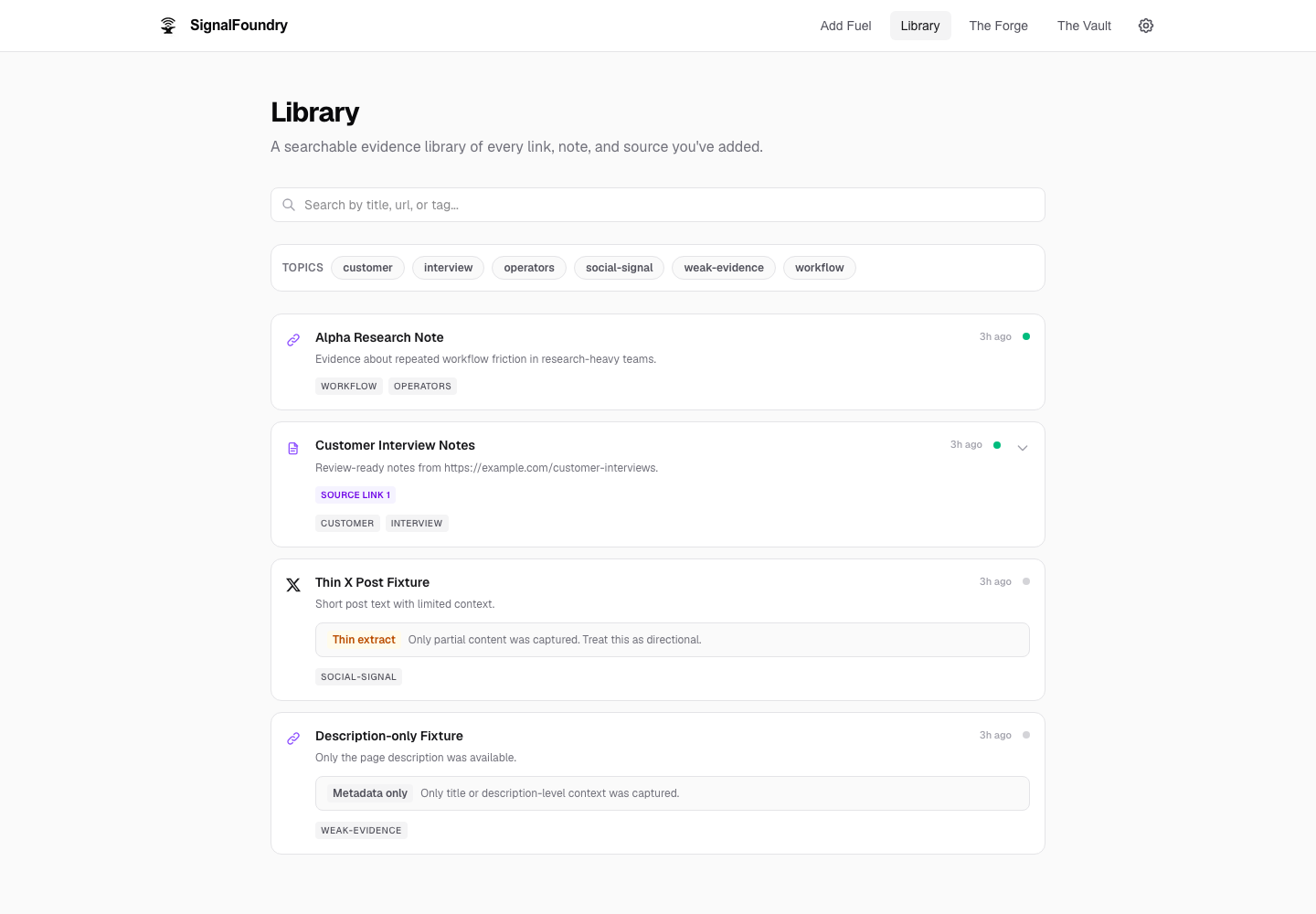
SignalFoundry Library screen showing searchable synthetic evidence rows with source context, tags, and follow-up actions.
The library view is the durable center of the workflow: saved evidence remains searchable before any signal becomes a brief.

Research piles up. Decisions still need evidence.

Useful clues about real problems get scattered across saved links, notes, and posts. The pile keeps growing without a clear view of what's worth building or pursuing.

What I built

A private research-to-opportunity workspace. Capture links, notes, and posts, add small files, and use a Chrome extension to grab sources in context. The library keeps the raw material searchable. The Forge helps pull out recurring pain points, and the Vault keeps the briefs that are worth revisiting.
Status

SignalFoundry runs as a live private preview that stays gated while I keep refining the core workflow. This case study is the public version; the app itself remains invitation-only.

The four main parts

The app stays small on purpose. You add material, review it in the Library, and use The Forge to decide which patterns deserve a brief.

Fuel

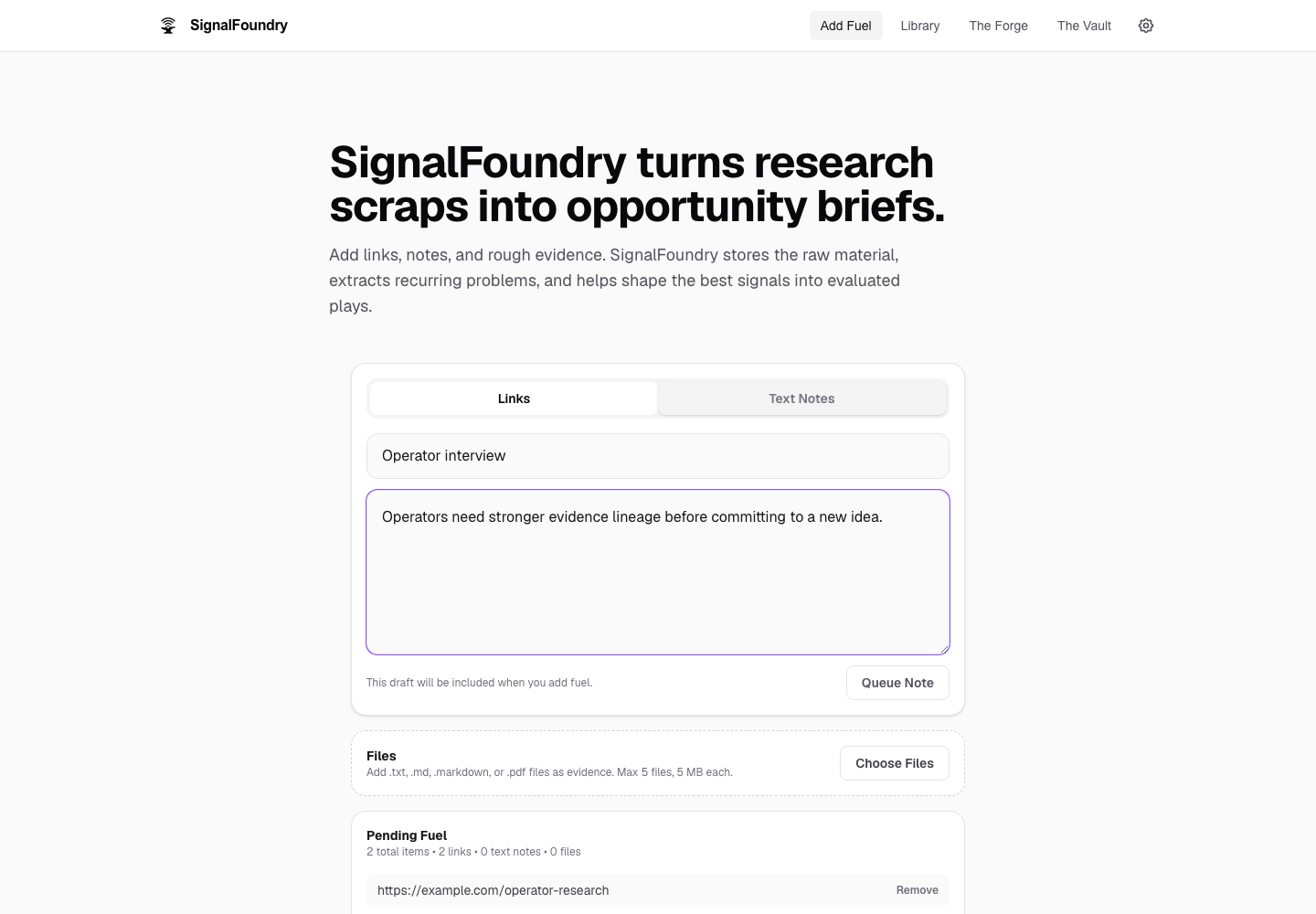
Add links, text notes, and small files; capture from the browser in context.

Library

Search, filter by topic, and review everything you've captured.

The Forge

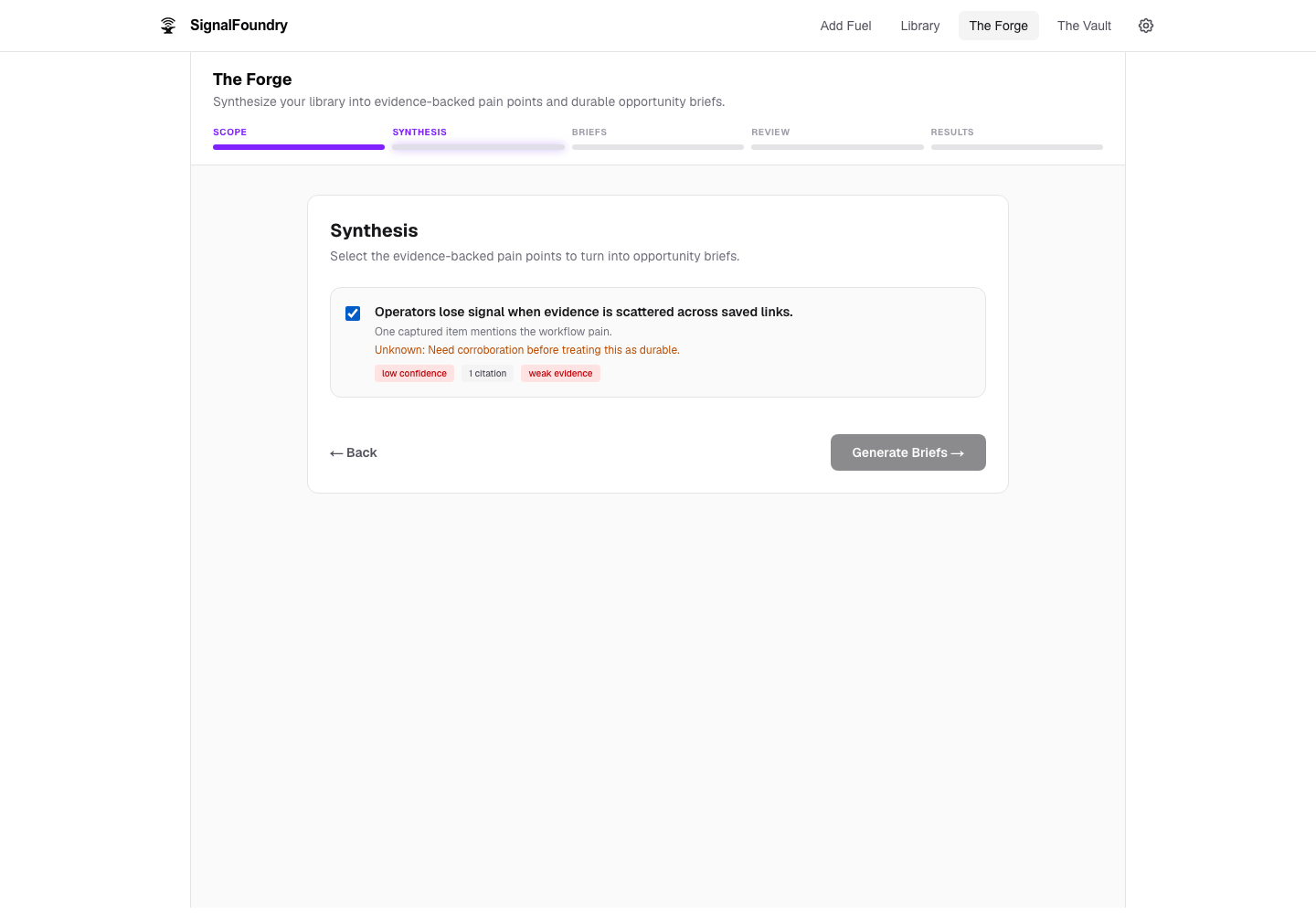
Group evidence into pain points and draft opportunity briefs.

The Vault

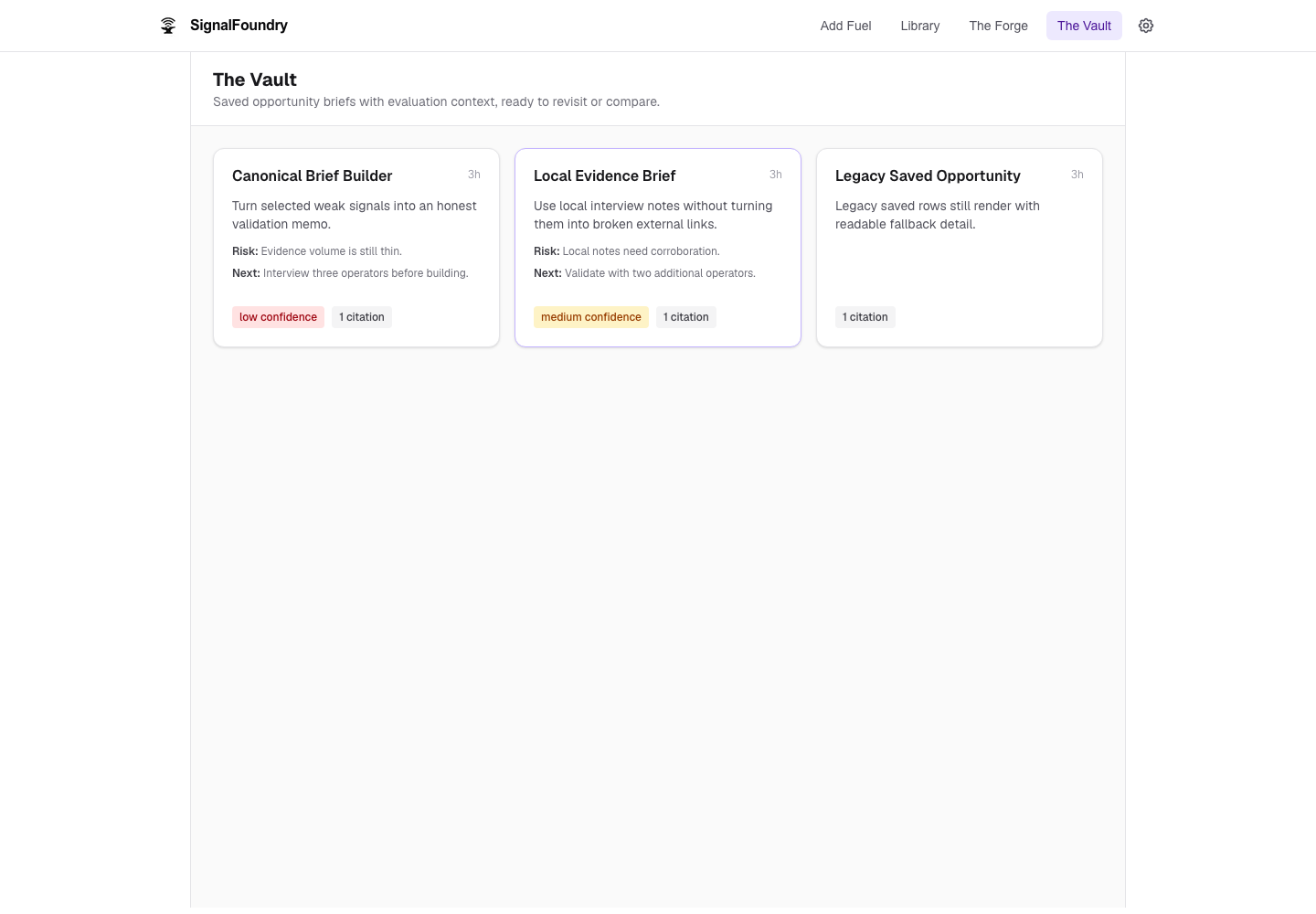
Revisit saved briefs with their evidence and decision history.

Architecture and flow

Cache-first reruns keep LLM cost and latency down. The Forge checks source strength before a weak summary becomes a build recommendation.

1Capture

Links, notes, and X posts arrive through the app or Chrome extension.

2Normalize

Extraction and source metadata turn rough input into reviewable evidence.

3Library

Every source remains searchable with tags, titles, URLs, and summaries.

4Forge

Evidence becomes candidate pain points, with weak signal clearly marked.

5Queue

Selected points generate briefs through the opportunity queue contract.

6Vault

Saved briefs keep confidence, uncertainty, and source history attached.

Next.js App Router TypeScript React Prisma Multi-provider LLM extraction + synthesis Chrome extension Vercel

Engineering decisions worth calling out

Research before briefs

Thin inputs prompt more research before a brief is generated.

Cache-first pipeline

Repeated inputs reuse prior extraction and summaries, so reruns stay cheap and fast.

Capture in context

A Chrome extension with enriched X-post extraction keeps evidence capture close to the moment of discovery.

Recoverable model workflows

Provider abstraction, schema-validated outputs, caching, and explicit retry states keep model-backed stages inspectable and recoverable.

Sanitized product screenshots

These screenshots were captured from the working SignalFoundry UI with route-mocked synthetic data. They don't include private research, customer data, API keys, or real opportunity briefs.

01 · Capture

Add Fuel

Links, text notes, and files become explicit entries instead of disappearing into hidden parsing rules.

SignalFoundry Add Fuel screen showing queued links and a drafted text note.

02 · Review

Library

Captured material stays searchable by title, URL, and tags, with topic filters and source context visible in the review list.

SignalFoundry Library screen showing searchable synthetic evidence rows with source context and tags.

03 · Synthesize

The Forge

Candidate pain points preserve confidence and uncertainty; weak evidence is visible before briefs are generated.

SignalFoundry Forge synthesis screen showing weak evidence, confidence, citations, and candidate pain points.

04 · Revisit

The Vault

Saved briefs keep confidence, next steps, risks, and evidence counts intact.

SignalFoundry Vault screen showing saved synthetic opportunity briefs with confidence and citation counts.

Transferable capability

SignalFoundry fits research-heavy work where saved material needs to become a decision: product discovery, market research, content operations, deal sourcing, trend mining, or consulting.

End to end

Raw capture flows into evaluated opportunity briefs without leaving the workspace.

Clear caveats

Weak inputs stay visible before anyone commits to a brief.

Deployed product

A real Next.js product with a browser capture extension and stable data contracts.

SignalFoundry and Contract Hunter use the same pattern on different inputs. Contract Hunter sorts job and contract postings; SignalFoundry organizes research.

Work together

I build tools like this.

Need research capture, evidence review, or opportunity workflows turned into a usable product?